
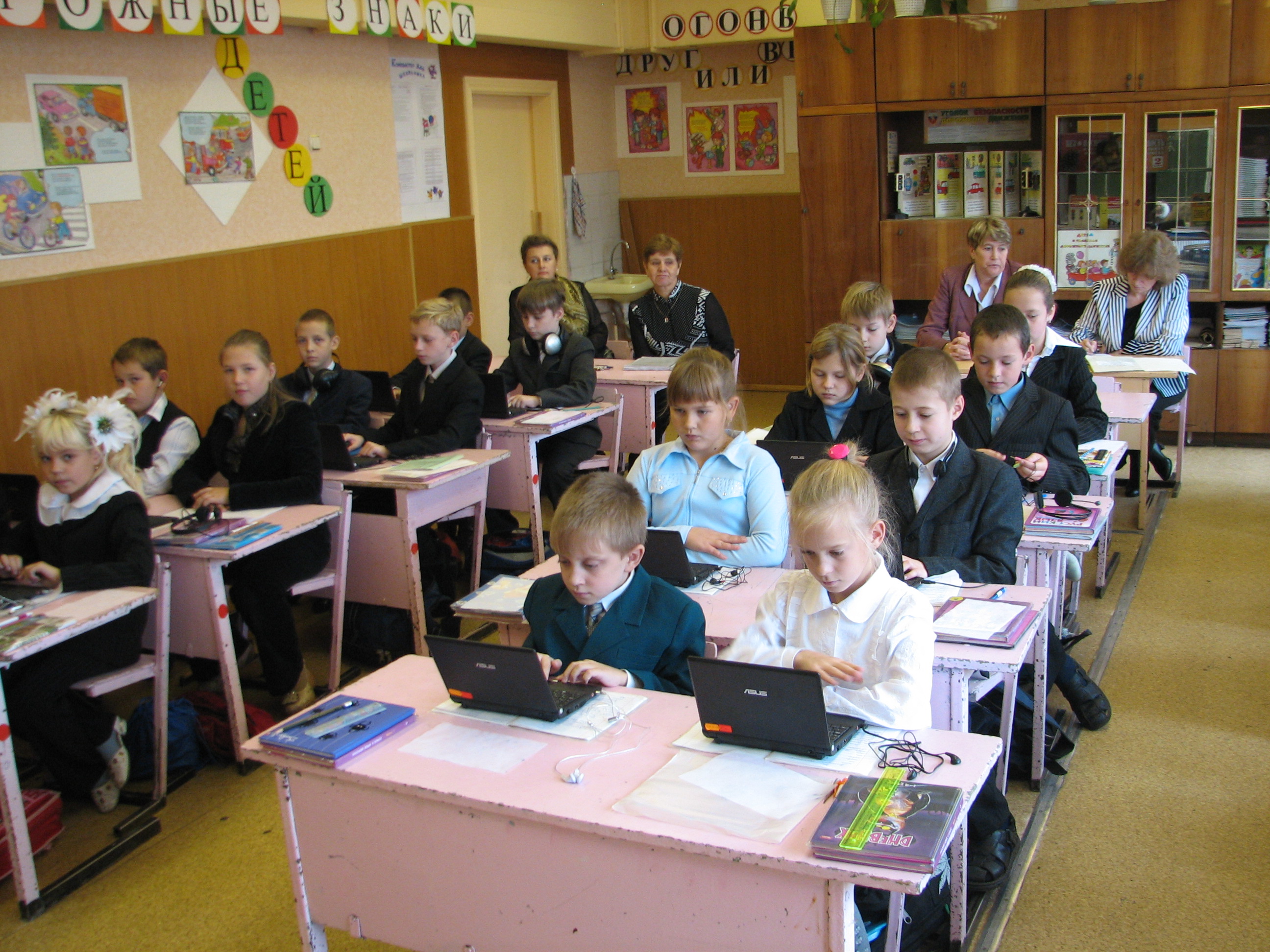
Education: Russia has one of the most amazing mass education systems ever. Their system is similar to ours here in Canada yet has some major differences. All Children in Russia (boys and girls) must go to school from ages 6-15. 6-10 year old go to primary school and 11-15 year old go to senior school. When children are 15 years old they have a choice,they can either go to vocational school or a non-university institute. They usually do their choice of schooling until they are 17 or 18 years of age. Their schooling consists of 4 terms with vacations in between. Students usually attend four 40-45 minute classes each day. There school normally starts at 8:am and ends at 1 or 2 in the afternoon. Some of there classes are mandatory like Russian literature, Russian history, Russian language, world history, math, and science. There are also some specialized schools that focus on certain subjects. Like in Canada students must pay for university.
Jobs: Russia has many job opportunities, yet there are some careers which employ many people. An example is aircraft manufacturing. It gives around 355,300 people jobs. Another job is automobile production. That gives around 600,000 people employment. Finally the last job is in the defense industry. That gives 2-3 million people jobs in Russia. Russia's currency is the Russian ruble, it is a soft currency making it difficult for exchange. One Ruble is about 0.022 in Canadian dollars. The Russian GDP per capita is $14, 611.70 USD, However, what the average person makes in one month depends on their job. Normally it is around 4500/3000 rubles a month. Making Russia a lower to middle class economy.

Economy: In 2015 Russia had the 6th largest economy. However, There have been multiple terrorist attacks and they have restricted news. Meaning that what they hear from the news is what the government wants them to hear. Russia has many natural resources, holding around 30% of the available sources. Russia is very rich in mining and is actually the leading producer in minerals and gold. Russia is also the biggest diamond producer in the world! In 2013 it was estimated that Russia produced over 33 million carats. Russia is also the leading exporter of natural gas. Russia's main export partners are the Netherlands, China, Germany, Italy, Turkey ,Belarus, and Japan.
Russia's main import partners are China, Germany, Italy, United states, and Belarus. Their main imports are oil, petroleum, and coal.
Russia's main import partners are China, Germany, Italy, United states, and Belarus. Their main imports are oil, petroleum, and coal.

Healthcare: In Russia majority of the population is provided with free healthcare under medical insurance. In 2008 Russia employed 621,000 doctors and 1.3 million nurses. The number of doctors is 43.8 per 10,000 people but only 12.1 doctors in rural areas. Only about 5% of the population has health insurance.

Russia has some qualities that would make it a desirable place to work, live or vacation, such as their highly educated workforce, and their many tourist attractions. But there are also some negative factors which should be taken into consideration if planning on visiting Russia.For example, economically, there are many citizens who are living in poor conditions due to lack of job opportunities. There is also a high risk of terrorist attacks, as well as a reputation of political instability. On the corruption perception index of 2016 they scored a 29 out of a possible 100% in the stability of their country. TO put this into perspective, Canada scored an 82, and the US scored a 74. If this trend were to continue, Russia would likely experience a population decrease, due to their economy suffering. The money they make off of tourism would also decrease due to the high risk of travel, leading to a lower GDP. In conclusion Russia has many qualities which would make it a desirable place to visit, however they must continue to improve their political stability as well as their GDP per capita in order to make sure that their country only sees a positive change.

